Author: scbfaadmin

  • SCBFA Names GOAT BOXCO Official Cooler of South Carolina Boaters and Anglers

    SCBFA Names GOAT BOXCO Official Cooler of South Carolina Boaters and Anglers

    SCBFA Names GOAT BOXCO Official Cooler of South Carolina Boaters and Anglers

    March 10, 2026
    Facebook
    X
    LinkedIn
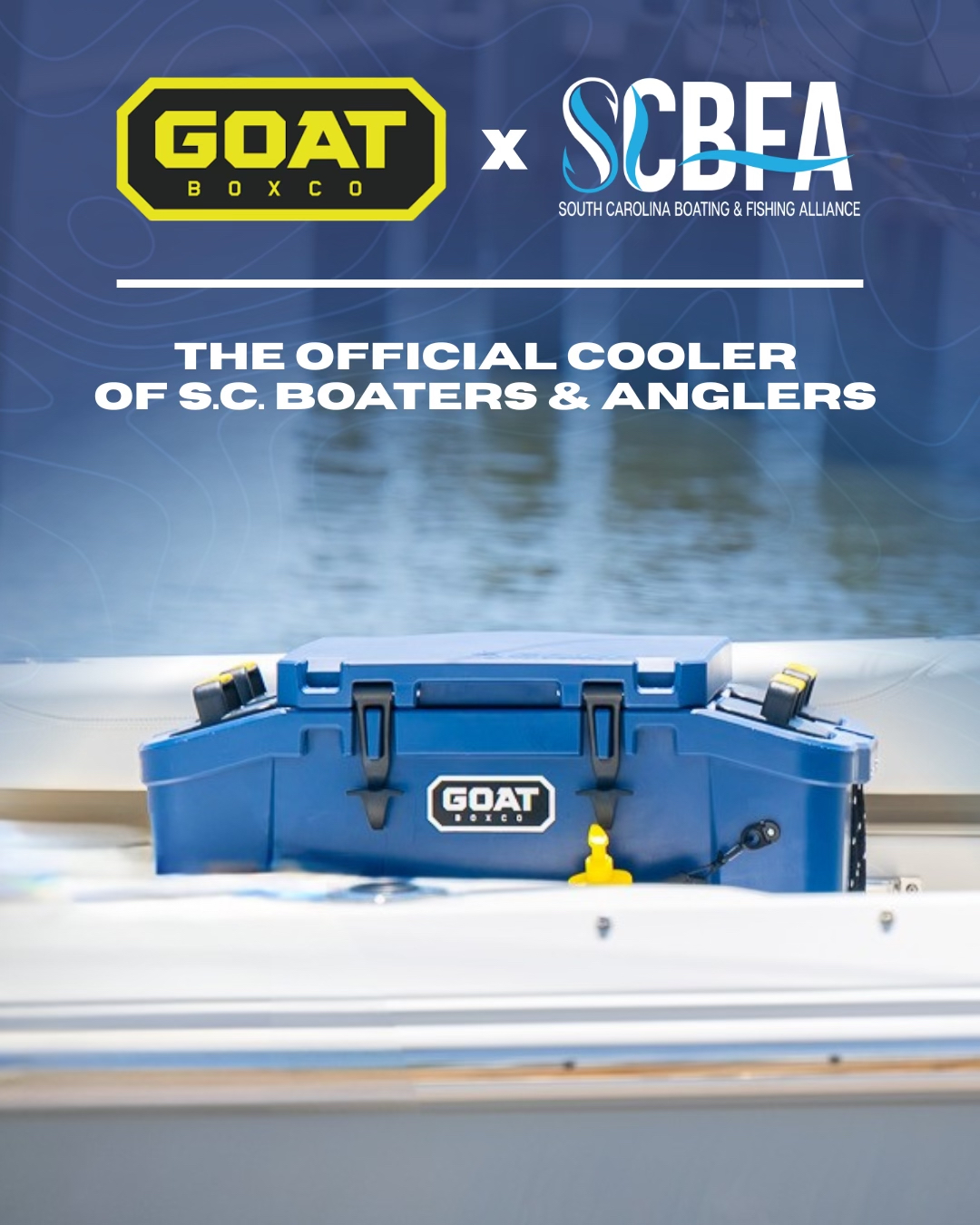
    GOAT BOXCO: Official Cooler of South Carolina Boaters and Anglers.

    COLUMBIA, S.C.The South Carolina Boating & Fishing Alliance (SCBFA) today announced GOAT BOXCO as the Official Cooler of South Carolina Boaters and Anglers, welcoming the American-made outdoor brand as its newest official partner.

    Built for long days on the water and full weekends outdoors, GOAT BOXCO coolers are proudly manufactured in Charlotte, N.C. The all-in-one design combines cold storage and dry storage in a single system, eliminating the need for extra backpacks or gear bags. Food, drinks, sunscreen, ponchos, first-aid supplies, tools, and tackle — everything has a place. What needs to stay dry stays dry. What needs to stay cold stays cold.

    SCBFA members and attendees got a firsthand look at GOAT BOXCO earlier this year at the Charleston Boat Show, where the cooler quickly became a conversation piece among boaters and anglers.

    “When we brought a GOAT BOX cooler to the Charleston Boat Show in January, it didn’t sit quietly in the corner,” said Gettys Brannon, President and CEO of the South Carolina Boating & Fishing Alliance. “People kept stopping to open it up, look inside, and see how it actually works. It’s rare to find a product that genuinely simplifies a day on the water, but GOAT has done exactly that. The fact that it’s built here in the Carolinas makes it an even better fit for our boating and fishing community.”

    Through GOAT BOXCO’s exclusive partnership with SCBFA, the company will sponsor the GOAT Box Catch of the Month, a new member-focused initiative celebrating South Carolina anglers throughout the year. Monthly winners will receive GOAT BOXCO swag, with winners competing for a personalized GOAT BOXCO cooler awarded at the end of 2026. SCBFA Grassroots members will also receive a one-time exclusive discount code toward the purchase of a GOAT BOXCO cooler.

    GOAT BOXCO’s thoughtful design has resonated with South Carolina boaters and anglers by offering a single, durable solution for cold storage, dry storage, and gear organization — letting people spend less time managing gear and more time enjoying the water.

    “At GOAT BOXCO, we build gear for people who live for the outdoors — whether that’s early mornings on the water, long casts at sunset, or whole weekends spent exploring nature. Partnering with the South Carolina Boating and Fishing Alliance aligns perfectly with our commitment to supporting outdoor culture, protecting access to clean waterways, and investing in the future of recreational boating and fishing across the Palmetto State,” said Gary Dickison, CEO of GOAT BOXCO.

    The addition of GOAT BOXCO further strengthens SCBFA’s growing network of brands that understand the real-world needs of South Carolina boaters and anglers while delivering practical, American-made products built for life on the water.

    “GOAT BOXCO is exactly the type of company we want standing with South Carolina outdoorsmen and women,” Brannon added. “They build smart, functional gear, they listen to the people who use it, and they understand that access, conservation, and time on the water are what matter most. We’re proud to welcome them to the Alliance.”

    GOAT BOXCO joins Spinx Convenience Stores and West Marine as the first three official partners of the South Carolina Boating & Fishing Alliance, strengthening the Alliance’s mission to support access, conservation, and the outdoor traditions that define South Carolina.

    For more information on GOAT BOXCO, visit www.goatboxco.com.

    Protecting and Expanding Boating and Fishing in South Carolina

    ©2021 South Carolina Boating and Fishing Alliance. All Rights Reserved.
  • South Carolina Marine Expert: Congress Should Listen to Boaters and Anglers, not Bureaucrats and Extremists​

    South Carolina Marine Expert: Congress Should Listen to Boaters and Anglers, not Bureaucrats and Extremists​

    South Carolina Marine Expert: Congress Should Listen to Boaters and Anglers, not Bureaucrats and Extremists

    SCBFA Founding Chair Chris Butler Testifies Before Congress on Fishing Access

    January 16, 2026

    Facebook
    X
    LinkedIn
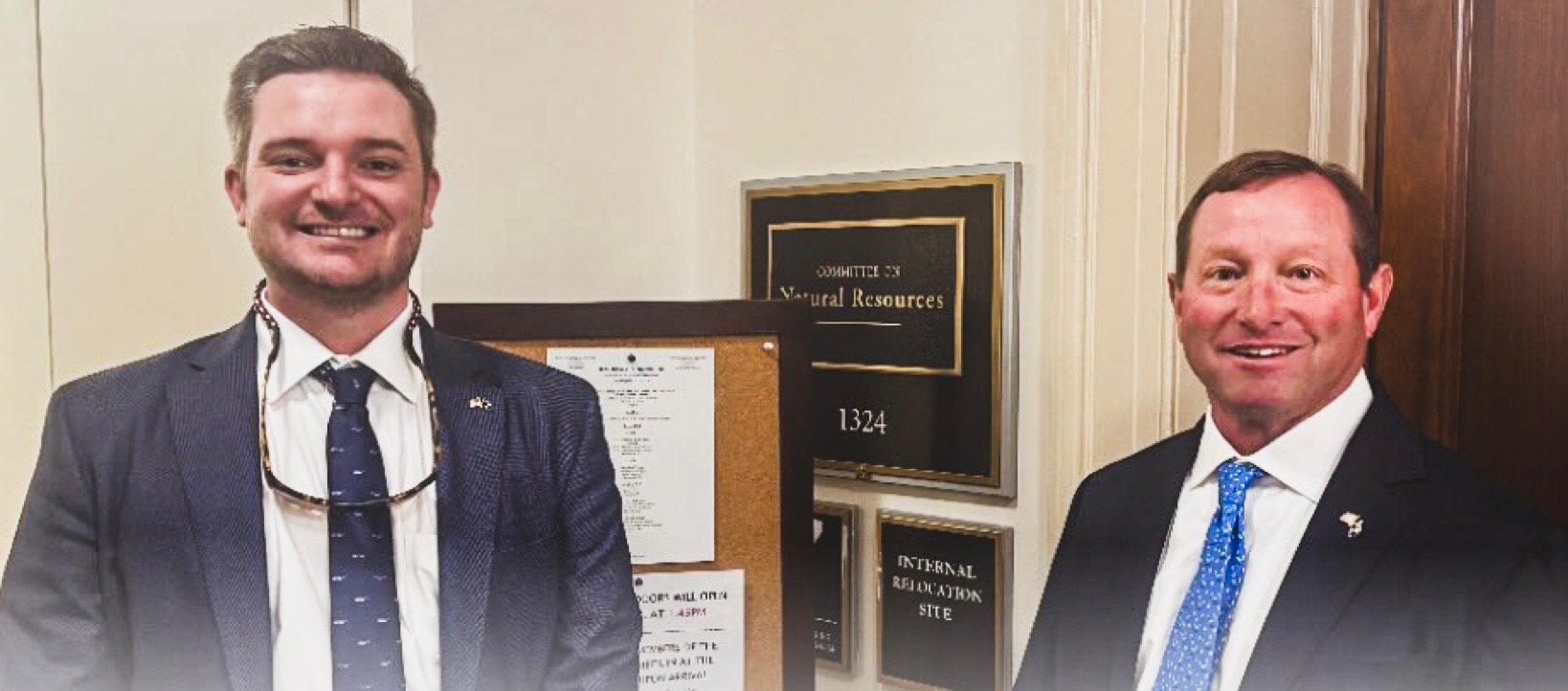
    SCBFA President and CEO Gettys Brannon and Founding Chairman Chris Butler of Butler Marine attended the U.S. House Committee on Natural Resources on Tuesday where Butler testified on public access.

    WASHINGTON, D.C. – South Carolina marine business leader and SCBFA Founding Chairman Chris Butler pressed Congress this week to include the people who know the waters best: boaters, anglers, and local residents in federal decision-making. He argued that these stakeholders see the real impacts every day, yet their voices are too often drowned out by distant bureaucrats and extremists.

    The owner of Butler Marine in Beaufort, S.C., testified before the Subcommittee on Water, Wildlife, and Fisheries during a hearing on “Hunting and Fishing Access in the Great American Outdoors,” emphasizing that states, local stakeholders, boaters, anglers, and small business owners should play a central role in marine conservation decisions.

    In his opening statement, Butler explained that the recreational boating and fishing industry contributes more than $6.5 billion annually to South Carolina’s economy, along with more than 27,000 jobs across the state. Butler told the committee those numbers represent real people whose livelihoods depend on access to the water and sound management decisions. Butler also submitted written testimony for the record, which further details his views on public fishing access and federal management decisions.

    Butler serves on the boards of Center for Sportfishing Policy and Marine Retailers Association of the Americas and is active on several local and statewide boards across South Carolina’s outdoor recreation and marine industries.

    Butler shared his personal background as a lifelong sportsman and business owner, noting his experience fishing and hunting across more than two dozen states and internationally. He explained his perspective is shaped not only by policy discussions, but by decades spent on the water and operating a marine business that depends on responsible access to public resources.

    “I’m here because I eat, sleep, and breathe fishing, boating, and hunting. All three of these outdoor activities are part of the culture for the Southeastern coast,” Butler said. “Decisions made in DC don’t only affect the ability for access for me, my family, and my friends. They also affects my livelihood.”

    “Public access is not just a quality-of-life issue. It is the foundation of the conservation funding model in this country. When access declines, participation declines. When participation declines, conservation funding declines as well,” Butler wrote in his formal testimony. “When conservation funding declines, on-the-water and on-the-ground conservation and management decline.”

    House Natural Resources Committee Chairman Bruce Westerman (R-AR-04) described Butler’s written testimony as profound, characterizing the link between conservation funding and declining participation as a “vicious cycle” that can cause lasting damage when the balance is disrupted, particularly given the excise taxes and funding mechanisms supported by sportsmen and women under the North American Model of Wildlife Conservation.

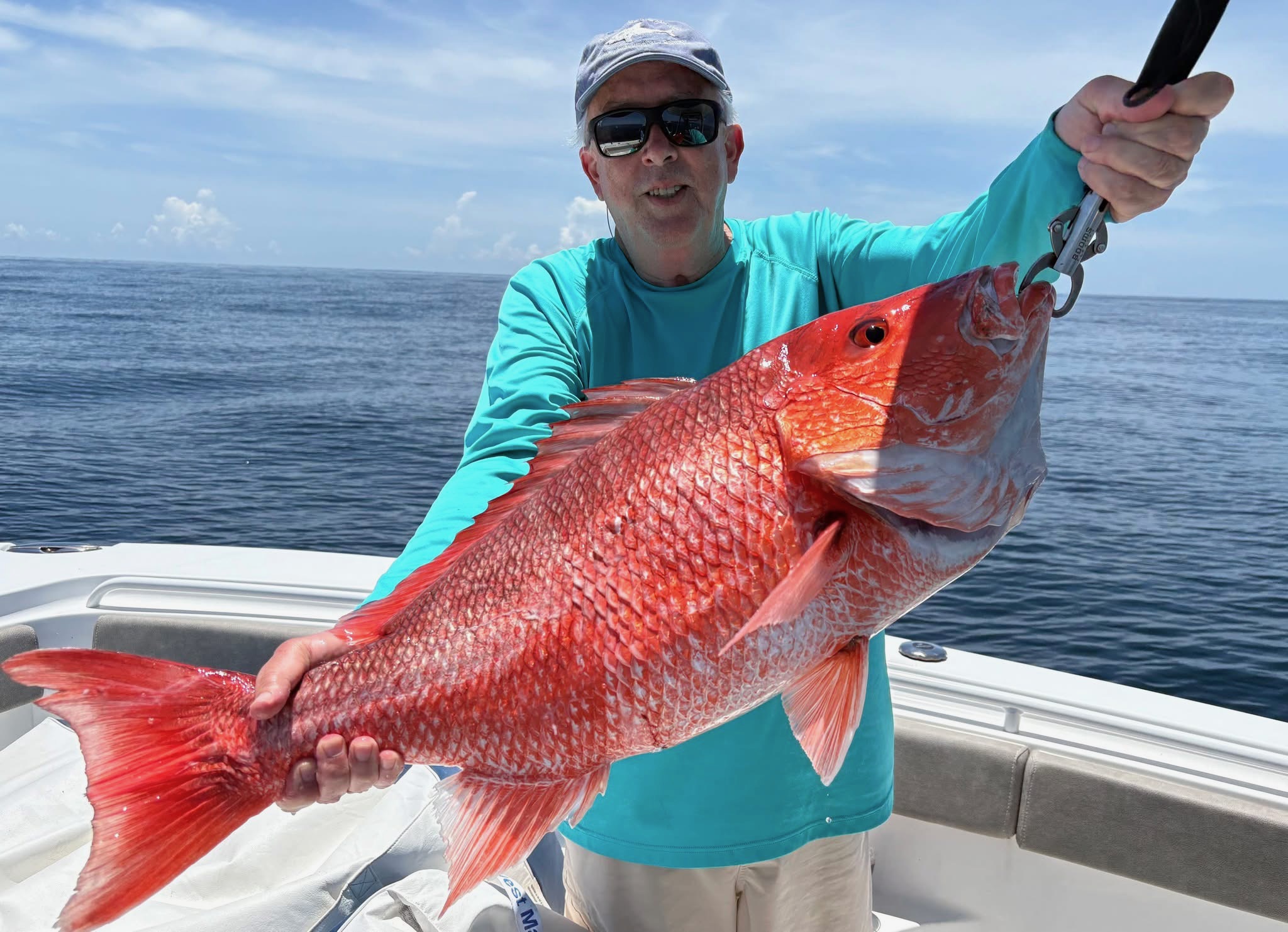
    During his testimony, Butler addressed the federal management of red snapper off the South Carolina coast.  He emphasized that the boating and fishing community supported wise measures to limit fishing when stocks were actually struggling, but the current conditions point to a strong and growing population. In fact, it is the largest population of red snapper ever in recorded history.  The National Oceanic and Atmospheric Administration (NOAA) removed the “overfished” label from the fishery in 2024. Butler urged the committee to encourage approval of the South Atlantic state’s Exempted Fishing Permits (EFPs) as written to improve data collection – and to allow states to play a larger role in the decision-making process with federal-waters resources.  

    Butler emphasized the dangers of the extremely short red snapper season, noting that anglers often feel they have no choice but to fish in bad weather due to the season only lasting two days. He said longer seasons would allow anglers to pick the days that work best for them to engage with public fishery resources. With a longer season, better data over time with larger sample sizes will lead to better decision making.

    In both his written and verbal testimony, Butler raised concerns about the scientific basis used to justify the 10-knot vessel speed restrictions advanced during the Biden Administration ostensibly to reduce North Atlantic right whale strikes. He noted there has been only one documented serious right whale strike off the South Carolina coast in the past 50 years, making such incidents exceedingly rare. Butler told lawmakers that a boater is statistically more likely to be struck by lightning than to strike a right whale in South Carolina waters.

    Butler also emphasized that the marine industry has invested heavily in charting, monitoring, and other tools to support practical, science-based right whale conservation. He criticized the reliance and pressure from environmental activist groups rather than objective data and risk-based analysis, arguing that such approaches unnecessarily restrict public access to the water and impose significant burdens on boaters, anglers, and marine businesses.

    “If you give me bad information, I can guarantee you a bad decision,” Butler emphasized. “If you give me the right information, I will get it right at least 50% of the time, maybe 75%.”

    He concluded his testimony urging lawmakers to rely on better data and to include states, anglers, and boaters in the management process, emphasizing the value of local knowledge in shaping effective conservation policy.

    “Who knows your backyard better than you?” He adding that South Carolina understands its coastline and fisheries in ways the federal government simply cannot when managing resources nationwide. Butler stressed that conservation decisions are strongest when informed by those who know the waters best: local anglers, boaters, and the state.

    Butler’s testimony reflects SCBFA’s ongoing efforts to ensure public access, sound conservation policy, and a sustainable future for South Carolina’s boating and fishing communities.

    To learn more about Butler Marine visit: www.butlermarineinc.com

    Protecting and Expanding Boating and Fishing in South Carolina

    ©2021 South Carolina Boating and Fishing Alliance. All Rights Reserved.

  • Bold New Plan Proposes 60+ Day Snapper Season Under South Carolina Control​

    Bold New Plan Proposes 60+ Day Snapper Season Under South Carolina Control​

    Bold New Plan Proposes 60+ Day Snapper Season Under South Carolina Control

    SCDNR submits Exempted Fishing Permit to U.S. Department of Commerce and NOAA Fisheries

    November 17, 2025

    Facebook
    X
    LinkedIn
    State Rep. Lee Hewitt (R-Murrells Inlet), who led a 17-member bipartisan letter to NOAA earlier this year, holds an Atlantic red snapper caught off South Carolina. (Photo provided.)

    MURRELLS INLET, S.C. — After decades of federal mismanagement, South Carolina has taken a decisive step toward state management of Atlantic red snapper. South Carolina Department of Natural Resources (SCDNR) Director Dr. Tom Mullikin, alongside State Senator Stephen Goldfinch (R-Georgetown), announced today that SCDNR submitted an Exempted Fishing Permit (EFP) proposal to the U.S. Department of Commerce and NOAA Fisheries seeking a 61‑ or 62‑day season and the authority to manage the recreational fishery starting in 2026. The South Carolina Boating & Fishing Alliance (SCBFA) and Coastal Conservation Association South Carolina (CCA SC) praised the move as the most significant development for offshore anglers in 20+ years.

    The permit, signed by SCDNR Deputy Director for Marine Resources Blaik Keppler and Regional Fisheries Manager Amy Dukes, follows years of coordination among state leaders, industry stakeholders, and conservation partners.

    It also aligns South Carolina with Florida, which announced a 39-day proposal on Monday, as well as Georgia and North Carolina, which all submitted similar EFPs early this week.

    The shared goal: restore access to one of the region’s most prized – and plentiful – fisheries by replacing the broken federal system with responsive, state-led management.

    “This proposal is a game-changer for South Carolina anglers,” said Sen. Goldfinch. “We’ve made the case, and I fully expect the Trump Administration and Secretary Lutnick to recognize South Carolina’s readiness to lead. The days of one-size-fits-all federal mismanagement are coming to an end. It’s time for local control, better data, real access and opportunity.”

    President Donald Trump previously signaled support for state snapper reform at his SCBFA Presidential Visit at Sportsman Boats in Summerville, S.C. on September 25, 2023, and by approving similar proposals in the Gulf of America in his first term, which led to successful transition to state control. The President pledged at the Summerville event to “rescind and revise absurd restrictions on recreational fishing, including red snapper and bottom fishing [in the South Atlantic].”

    South Carolina’s congressional delegation, including Congressman Russell Fry (R-Surfside Beach) in his role co-chairing the South Atlantic Red Snapper Task Force, has worked closely with members of Congress to advance the State’s push for local control.

    “For too long, our anglers and fishers have been limited by federal rules built on bad data,” said Congressman Fry. “With this state-led proposal, South Carolina has a real opportunity to reclaim access and apply modern, local science to management. I’m proud to serve on the South Atlantic Red Snapper Task Force and support efforts that put our anglers and coastal economy first.”

    SCDNR submitted the formal EFP request November 10, 2025, in response to President Trump’s Executive Order 14276, “Restoring American Seafood Competitiveness.” The proposed permit would allow a 61- or 62-day recreational red snapper season in 2026, replacing the federal mini seasons (of one or two days) that have frustrated anglers for years. All trips under the EFP will require mandatory electronic reporting through a mobile app, and harvest limits will mirror existing state regulations – one fish per person with a 20‑inch minimum size limit – a framework Senator Goldfinch championed in 2022.

    SCDNR’s EFP sharply rebukes the federal data-gathering system, Marine Recreational Information Program (MRIP), calling it unreliable for red snapper management. According to the application, “MRIP does not provide reliable catch estimates for red snapper landings or discards due to the narrow seasonal openings for harvest versus multi-month wave data collection design, resulting in low intercept rates of anglers and high percent standard errors (PSEs).” The EFP cites years with no available data; notes that PSEs for South Carolina landings have exceeded 50 percent in nearly every year since 1981, and states plainly that MRIP “is not a reliable source for monitoring in-season landings or annual discards of red snapper off the South Carolina coast.”

    The state’s pilot program would test the ability of modern, state-run data systems to monitor harvests in real time and evaluate whether longer seasons can reduce risky “derby-style” fishing. That issue was highlighted in a bipartisan letter led by State Representative Lee Hewitt (R-Murrells Inlet) and signed by 17 lawmakers in July, following yet another year in which federal mini seasons coincided with hazardous offshore weather. South Carolina’s plan is modeled after the Gulf States’ successful transition to state management and echoes the growing demand across the South Atlantic for more local control federal waters fisheries.

    “Director Mullikin and his team have shown a keen vision and tremendous leadership in answering the call for reform,” said Gettys Brannon, President & CEO of SCBFA. “This proposal is a turning point that reflects years of groundwork and a clear shift toward smarter, state-led fisheries management.”

    Under the jurisdiction of the South Atlantic Fishery Management Council and NOAA Fisheries, Atlantic red snapper has become the antithesis of common sense… contradicting all scientific rigor to bar access to America’s public resources. Despite data showing a healthier stock than in any time in recorded history, federal fisheries managers have been reluctant to provide anglers opportunity to harvest widely popular species.

    “Today is a huge step forward for South Carolina recreational anglers regarding access and for advancing a state data collection and management process that is much more nimble and responsive to red snapper management scenarios” said CCA South Carolina Executive Director, Scott Whitaker. “We look forward to working with the State on the implementation of this plan to enhance public access, provide valuable scientific data, and improve long-term fishery sustainability.”

    “From North Carolina to Florida, the fishing public is thrilled with the leadership of their state marine fisheries managers this week,” said Center for Sportfishing Policy President Jeff Angers. “These Exempted Fishing Permits promise a hopeful future for the fish, the fishermen and coastal communities. South Atlantic red snapper is a plentiful resource, and state management will ensure access and opportunity for all anglers in the region. Kudos to SCDNR for their leadership.”

    The proposal has strong backing from elected officials at every level. Over the past year, governors, including South Carolina’s Henry McMaster, attorneys general, and congressional delegations from all four South Atlantic states have publicly backed transferring red snapper management to state control. Just last month, South Carolina Attorney General Alan Wilson led a multistate letter urging federal officials to approve state-led management and reject the flawed federal data models.

    SCDNR submitted its EFP to U.S. Secretary of Commerce Howard Lutnick on Monday. If approved, South Carolina could implement a state-managed red snapper season beginning in 2026.

    Protecting and Expanding Boating and Fishing in South Carolina

    ©2021 South Carolina Boating and Fishing Alliance. All Rights Reserved.
  • Sportfishing Groups Applaud Attorneys General for Supporting State Management of Red Snapper

    Sportfishing Groups Applaud Attorneys General for Supporting State Management of Red Snapper

    Sportfishing Groups Applaud Attorneys General for Supporting State Management of Red Snapper

    Letter led by Attorney General Wilson alongside Georgia, and Florida Attorneys General Adds Momentum to Red Snapper Reform

    October 17, 2025

    Facebook
    X
    LinkedIn

    COLUMBIA, SC  — The South Carolina Boating & Fishing Alliance (SCBFA) and Coastal Conservation South Carolina joined national sportfishing organizations in welcoming a major step forward for red snapper reform as the Attorneys General of South Carolina, Georgia, and Florida submitted a joint letter calling on the federal government to transfer management of South Atlantic red snapper to the states.

    Addressed to U.S. Commerce Secretary Howard Lutnick, the letter was signed by South Carolina Attorney General Alan Wilson, Georgia Attorney General Chris Carr, and Florida Attorney General James Uthmeier. It urges the administration to follow sound science, initiate a unbiased peer-reviewed evaluation of the upcoming Great Red Snapper Count (GRSC), and begin the transition toward a state-led management framework. This approach has already delivered better conservation outcomes and more access in the Gulf of America.

    “From statehouse members to governors to bipartisan congressmen to attorneys general, the South Atlantic is speaking with one voice,” said Gettys Brannon, CEO of the South Carolina Boating & Fishing Alliance. “We are grateful to Attorney General Wilson for leading this effort. His action adds real momentum to the growing push for state management, which offers the best hope for longer seasons, better data, and fairer access to this incredible fishery.”

    The Attorneys General called for three specific actions:

    1.    Gold Standard Peer Review of the Red Snapper Count – Ensure the forthcoming Great Red Snapper Count is reviewed under President Trump’s executive order on Restoring Gold Standard Science to provide a credible, independent basis for future management.

    2.    Transfer Data Collection to the States – Recognize that the South Atlantic states are already leading much of the data work and should be fully empowered and resourced to conduct modern, timely harvest monitoring.

    3.    Begin the Shift to State Management – Use tools such as Exempted Fishing Permits and Emergency Regulations to quickly transfer decision-making to the states, without waiting for a years-long federal process.

    This announcement comes amid growing bipartisan momentum for red snapper reform. In recent months, governors and congressional delegations from South Carolina, Georgia, and Florida have urged the U.S. Department of Commerce to move away from the current broken system. The newly formed House South Atlantic Red Snapper Task Force, co-chaired by Rep. John Rutherford (Fla.), Rep. Russell Fry (S.C.), Rep. Buddy Carter (Ga.), and Rep. David Rouzer (N.C.), is working to build congressional support for a new vision.

    Last month, fisheries directors from South Carolina, Georgia, Florida, and North Carolina submitted a joint Action Plan to the Task Force outlining a path toward state-based management. The plan acknowledged that outdated federal data and a one-size-fits-all model have led to overly restrictive and unpredictable red snapper seasons, despite stock assessments showing a population larger than at any time in recorded history. The states committed to creating more responsive, science-driven systems that better balance conservation with angler access.

    “It is not often you see this level of unity behind any issue, and I believe it speaks to the level of confidence that we have in the ability of our state wildlife managers to handle this task,” said Scott Whitaker, executive director of Coastal Conservation Association South Carolina. “Federal fisheries management has failed the public, and we are grateful that our elected officials – from our governor to our Congressional delegation to our attorney general – are united in recognizing that the states are the best managers of their own natural resources.”

    Sportfishing groups from across the country voiced strong support for the Attorneys General and the pathway laid out in the letter, including the Center for Sportfishing Policy (CSP).

    “When Attorneys General weigh in, it shows just how deeply this issue matters to their states,” said CSP President Jeff Angers. “This letter is not just about red snapper. It’s about restoring balance between Washington and the states. The South Atlantic governors, congressional delegation, and now the AGs are all saying the same thing: the states are ready to lead. And when they do, anglers, conservation, and coastal economies win.”

    Protecting and Expanding Boating and Fishing in South Carolina

    ©2021 South Carolina Boating and Fishing Alliance. All Rights Reserved.

  • South Carolina Congressional Delegation Urges State Control of Red Snapper Fishery​

    South Carolina Congressional Delegation Urges State Control of Red Snapper Fishery​

    South Carolina Congressional Delegation Urges State Control of Red Snapper Fishery

    Sportfishing Industry Applauds Unified Push to End Federal Mismanagement, on the Heels of McMaster Letter to U.S. Commerce Secretary

    May 29, 2025

    Facebook
    X
    LinkedIn
    Congressman Russell Fry (R-Surfside Beach) is leading the charge to return red snapper management in the South Atlantic to the states, calling for a science-based system that reflects on-the-water reality.

    COLUMBIA, SC  — South Carolina’s congressional delegation, led by Congressman Russell Fry (R-Surfside Beach) and joined by U.S. Senators Lindsey Graham and Tim Scott and Representatives Joe Wilson, Ralph Norman, Nancy Mace, William Timmons, and Sheri Biggs, has formally urged U.S. Commerce Secretary Howard Lutnick to transfer management of the South Atlantic snapper-grouper fishery to the states.

    In a joint letter sent this week, the delegation expressed “strong support for a new state-led framework to ensure more effective, science-based stewardship” of a fishery at the center of South Carolina’s $6.5 billion recreational boating and fishing industry.

    “For too long, federal mismanagement has hurt our coastal communities and undermined trust in the system,” said Congressman Fry. “South Carolina anglers deserve better than critical decisions based on bad data. It’s time to follow the successful model we’ve seen in the Gulf of America and let states lead the way, just like we did under the first Trump administration in the Gulf.”

    The letter represents a growing movement to shift red snapper management away from the federal government’s flawed, one-size-fits-all model and toward a state-led approach grounded in better data, local knowledge and on-the-water realities.

    “NOAA’s continued use of highly questionable MRIP estimates has led to disastrous, economically harmful policies that unnecessarily restrict angler access and harm our coastal communities,” the delegation wrote, citing the Marine Recreational Information Program (MRIP), which the National Academy of Sciences has labeled “fatally flawed.”

    Despite NOAA’s own 2021 stock assessment showing red snapper are “rebuilding ahead of schedule,” the agency allowed just one day of recreational harvest in the South Atlantic in 2024.

    The congressional letter follows a May 15 letter from Governor Henry McMaster, who cautioned Secretary Lutnick that NOAA’s new restrictions “further undermine public confidence in the federal government’s management of fisheries off our coast.”

    McMaster called the potential closure from Amendment 59 “an increasing threat to our state’s economy,” which includes more than 725,000 licensed anglers, nearly 500,000 registered boats, and over 640 marine-dependent businesses.

    “I ask that you give thoughtful consideration to reversing NOAA’s restrictions on red snapper fishing in the South Atlantic and remove the barriers to offshore recreational fishing they create,” McMaster wrote in his letter.

    The delegation’s action also comes just weeks after Florida Governor Ron DeSantis announced a record-setting 126-day red snapper season for Gulf anglers — made possible by that region’s successful shift to state-led fisheries management during President Trump’s first term in 2017.

    In support of the overarching move to empower the states, Governor McMaster recently signed and heralded State Senator Stephen Goldfinch’s (R-Georgetown) S. 219, a state law giving South Carolina authority over all 55 species in the snapper-grouper complex within state waters.

    “South Carolina continues to be bound by federal regulations that don’t reflect the reality on our coast,” said Senator Goldfinch. “While Gulf states are expanding their fishing seasons, we’ve continuously faced more restrictive measures based off flawed science and data practices from NOAA, leading to just a single day of snapper fishing and threatened closures.”

    “The Gulf of America faced a similar crisis and found a solution,” the congressional delegation wrote. “That effort restored reasonable access, improved accountability, and strengthened conservation outcomes. We believe it is time for the South Atlantic to follow that successful example.”

    Sportfishing leaders applauded South Carolina’s unified leadership and echoed the call for urgent reform.

    “Our federal system is failing the people who rely on these waters,” said Gettys Brannon, President and CEO of the South Carolina Boating & Fishing Alliance. “Congressman Fry and Governor McMaster have shown tremendous leadership. It’s time for a better way forward: one that puts local knowledge and modern science at the heart of fisheries management.”

    “The one-size-fits-all approach from Washington is broken,” said Jeff Angers, President of the Center for Sportfishing Policy. “The Gulf states proved that when you empower state agencies with the right tools, access improves, conservation strengthens, and trust is restored. The South Atlantic deserves that same opportunity.”

    “Recreational boating and fishing in South Carolina contributes $6.5 billion to the state’s economy and supports more than 27,000 jobs,” added Martha Guyas, Southeast Fisheries Policy Director for the American Sportfishing Association. “However, federal management of red snapper has been excessively restrictive, limiting the ability of anglers to get on the water and harvest this remarkably abundant fishery. We thank the South Carolina Congressional delegation for supporting solutions to improve red snapper management for the benefit of all those who enjoy our marine resources.”

    The delegation’s letter urges the U.S. Department of Commerce to:

    1.    Pause implementation of Amendment 59 and similar sweeping closures;

    2.    Support cooperative, state-led fisheries management modeled after the Gulf red snapper program, and

    3.    Empower states to deliver better data, more balanced access, and greater accountability in managing offshore fisheries.

    States across the South Atlantic are preparing to expand offshore angler surveys and modernize data collection efforts, laying the groundwork for a regional shift toward state-led fisheries management modeled after the successful Gulf program.

    “Our position is simple,” added Brannon. “When the states are allowed to lead, fisheries recover, public trust improves, and recreational opportunity grows. That’s the future we’re fighting for.”

    For the full letter click here.

    Protecting and Expanding Boating and Fishing in South Carolina

    ©2021 South Carolina Boating and Fishing Alliance. All Rights Reserved.

  • New Law Gives S.C. Control Over Snapper Grouper Fisheries​

    New Law Gives S.C. Control Over Snapper Grouper Fisheries​

    New Law Gives S.C. Control Over Snapper Grouper Fisheries

    South Carolina Boating & Fishing Alliance and Coastal Conservation Association South Carolina Celebrate Passage of S. 219, Paving the Way for State Control of Fisheries

    May 14, 2025

    Facebook
    X
    LinkedIn

    COLUMBIA, SC  — Governor Henry McMaster last week signed into law Senate Bill 219, marking a significant victory in the movement toward state management of the snapper-grouper fishery. 

    Championed by State Senator Stephen Goldfinch (R-Georgetown), the new law sets up a state-specific fishing season for all 55 species in the snapper-grouper species complex.

    “This new law reflects South Carolina’s commitment to common sense, homegrown solutions,” said Governor Henry McMaster. “Our anglers deserve a system that’s fair, science-driven, and tailored to our state’s unique waters, not a one size fits all approach. With S. 219, we begin putting our state in the driver’s seat to manage our resources responsibly and protect access for current and future generations.”

    The law’s signing comes at a crucial time, just weeks after Florida Governor Ron DeSantis announced a record-breaking 126-day red snapper season for anglers on the Gulf of America in 2025.

    In contrast, anglers in the South Atlantic (South Carolina, North Carolina, Georgia, and Florida) may only have one day of snapper fishing and could potentially lose all access to bottom fishing for 55 stocks of fish in parts of the region due to Amendment 59, proposed by the Biden Administration seven days before he left office.

    S.C. new state law establishes fishing seasons, catch limits, and minimum size requirements for 55 species of fish under the Snapper-Grouper Fishery Management Plan out to three nautical miles, which were previously governed solely by federal restrictions.

    “This law affirms South Carolina’s capacity to manage our state waters with precision and purpose and will assist the agency in expanding data collection efforts” said Dr. Tom Mullikin, Director of the South Carolina Department of Natural Resources. “We are committed to developing and using locally informed science to create more fishing access while preserving marine ecosystems. This law is proof that conservation and access can go hand in hand.”

    The law builds upon Senator Goldfinch’s previous efforts to exclude red snapper and black sea bass from federal regulations in state waters. The new law expands this framework to include all 55 species under the snapper-grouper complex, giving South Carolina greater control over its fisheries.

    This represents a critical step toward securing local control over South Carolina’s fisheries, addressing the overregulation that has historically limited opportunities for the state’s anglers and boaters.

    “For too long, we’ve been bound by federal regulations that don’t make sense for South Carolina,” said Senator Goldfinch. “While Gulf states are expanding their fishing seasons, we’ve continuously faced more restrictive measures based off flawed science and data practices from NOAA (National Oceanic and Atmospheric Administration), leading to just a single day of snapper fishing and threatened closures. This bill gives us the starting point we need to protect our fisheries to maximize fishing opportunities for South Carolina’s anglers. This law is not just a win for anglers; it’s a win for everyone who values our state’s natural resources.”

    NOAA has admitted multiple times over the past 13 years that its Marine Recreational Information Program (MRIP) data, used to inform fishing regulations, is flawed, most recently confessing to overestimating catch by up to 40%. These repeated errors in data management underscore the need for a more reliable, locally informed approach to fisheries management.

    “Senator Goldfinch has been a tireless advocate for our state’s fishing communities,” said Gettys Brannon, President and CEO of the South Carolina Boating & Fishing Alliance. “This law empowers South Carolina to begin taking control of its fisheries, ensuring that our anglers and boaters are on a path where they no longer face the restrictive and often misinformed regulations imposed by NOAA. This is a win for the recreational fishing community and the state’s economy.”

    Scott Whitaker, Executive Director CCA South Carolina, echoed these sentiments: “This law marks a significant shift in how we manage our marine resources, moving away from overbearing federal oversight and towards local, science-based decision-making. We are grateful for the leadership of Senator Goldfinch, Governor McMaster, Director Mullikin and all those who have supported this legislation to protect both our environment and our fishing heritage.”

    S. 219’s passage is also praised by national conservation leaders, including Jeff Angers, President of the Center for Sportfishing Policy, who said: “South Carolina is at the front of the pack with its can-do attitude; its stand-out director and its newly enacted snapper grouper seasons in state waters.”

    South Carolina’s boating and fishing industry contributes $6.5 billion annually to the state’s economy and supports more than 27,100 jobs. The passage of S.219 marks a major step toward long-sought state control over the snapper-grouper fishery in the South Atlantic — an approach that has served as both an economic boon and a blueprint for sustainable fisheries management in the Gulf of America since its implementation in 2017. This state-led model has not only expanded access for anglers but also strengthened conservation outcomes through more accurate, locally driven data collection.

    South Carolina’s congressional delegation has consistently advocated for state management measures, recognizing the need for local control over the state’s valuable fisheries resources.

    The law received broad national support from the Center for Sportfishing Policy, Congressional Sportsmen’s FoundationAmerican Sportfishing Association, and Coastal Conservation Association.

    Protecting and Expanding Boating and Fishing in South Carolina

    ©2021 South Carolina Boating and Fishing Alliance. All Rights Reserved.
  • Local Leaders to State Lawmakers: Cut the Nation’s Worst Boat Tax

    Local Leaders to State Lawmakers: Cut the Nation’s Worst Boat Tax

    Local Leaders to State Lawmakers: Cut the Nation’s Worst Boat Tax

    Signatories include Columbia, Charleston, and Summerville Mayors among others

    May 5, 2025

    Facebook
    X
    LinkedIn

    COLUMBIA, SC  — A growing group of municipal and county leaders from across South Carolina — including Columbia Mayor Daniel Rickenmann, Charleston Mayor William Cogswell, and Summerville Mayor Russ Touchberry — are calling on the General Assembly to pass H.3858 in a formal letter submitted last week to House Ways and Means Committee Chairman Bruce Bannister. The bill would deliver long-overdue tax relief to more than 300,000 South Carolina boat owners, who currently pay the highest boat property taxes in the United States. Support from the mayors of the state’s capital and its largest coastal city signals how critical and widely supported this reform has become.

    “No one should be punished for enjoying the outdoors that make South Carolina special,” said Columbia Mayor Daniel Rickenmann, a lead signer of the letter. “This is about fairness to ensure our families can continue to enjoy our natural assets in boats big and small for years to come.”

    In the letter submitted last week to House Ways and Means Committee Chairman Bruce Bannister, officials from cities and counties across the state voiced support for the legislation, which would cut boat taxes by nearly half and eliminate the outdated requirement to title outboard engines.

    “These are not the wealthy elite. They are the backbone of our communities,” the letter reads. “Yet they are taxed five to seven times more than their neighbors just across the state line. That’s not just uncompetitive — it’s unjust.”

    Signers include leaders from Columbia, Charleston, Summerville, Kershaw County, York County, Allendale County, and Berkeley County, making clear that support for H.3858 spans both geography and party lines.

    “In most counties and municipalities, boat property taxes account for less than 1% of total revenue,” the leaders write. “With naturally growing tax bases and the ability to budget responsibly, local governments can absorb this modest reduction without sacrificing core services.”

    The letter also points out a critical issue: these taxes don’t fund marine services. They are directed to general funds, not to boat ramps, waterway maintenance, or marine law enforcement.

    “In essence, taxpayers are paying for services they don’t receive,” the letter states.

    Led by sponsor Rep. Gary Brewer (R-Charleston), Rep. Phillip Lowe (R-Florence), and House Minority Leader Todd Rutherford (D-Richland), H.3858 has more than 50 bipartisan cosponsors and the public support of Governor Henry McMaster.

    “This is not about politics. It’s about fairness,” the letter concludes. “Let’s restore trust, keep boats and dollars in South Carolina, and show our citizens that we value their hard work and quality of life.”

    H.3858 is currently on the House calendar for debate during the final week of this year’s legislative session. Supporters are encouraged to contact their state representatives and senators to urge its passage.

    Read the letter here: https://www.scbfa.com/wp-content/uploads/2025/05/MunicipalLeaderCountyLetterFinal.pdf

    Signatories include:

    • Mayor Daniel Rickenmann – Columbia
    • Mayor William Cogswell – Charleston
    • Mayor Russ Touchberry – Summerville
    • Councilman Russell Brazell – Kershaw County
    • Councilman Brant Tomlinson – Kershaw County
    • Councilman Andy Litten – York County
    • Councilman Matthew Connelly – Allendale County
    • County Supervisor Johnny Cribb – Berkeley County

    EMAIL YOUR LEGISLATORS

    Bill Sponsors Include:

    Brewer, Pedalino, Lowe, Mitchell, M.M. Smith, B.J. Cox, Chapman, Davis, Sessions, Erickson, Guffey, B.L. Cox, Hewitt, Teeple, Hartnett, Pope, Rutherford, Brittain, Wooten, Guest, Hager, J.L. Johnson, B. Newton, Bailey, Bustos, Gagnon, Gilliam, Herbkersman, Holman, Jordan, Lawson, Martin, Murphy, Robbins, Ballentine, T. Moore, Montgomery, Sanders, Atkinson, Ligon, Gibson, J. Moore, Caskey, Moss, Huff, Beach, Terribile, Kilmartin, Hardee, Taylor, Yow, J.E. Johnson, and Landing.

    Protecting and Expanding Boating and Fishing in South Carolina

    ©2021 South Carolina Boating and Fishing Alliance. All Rights Reserved.
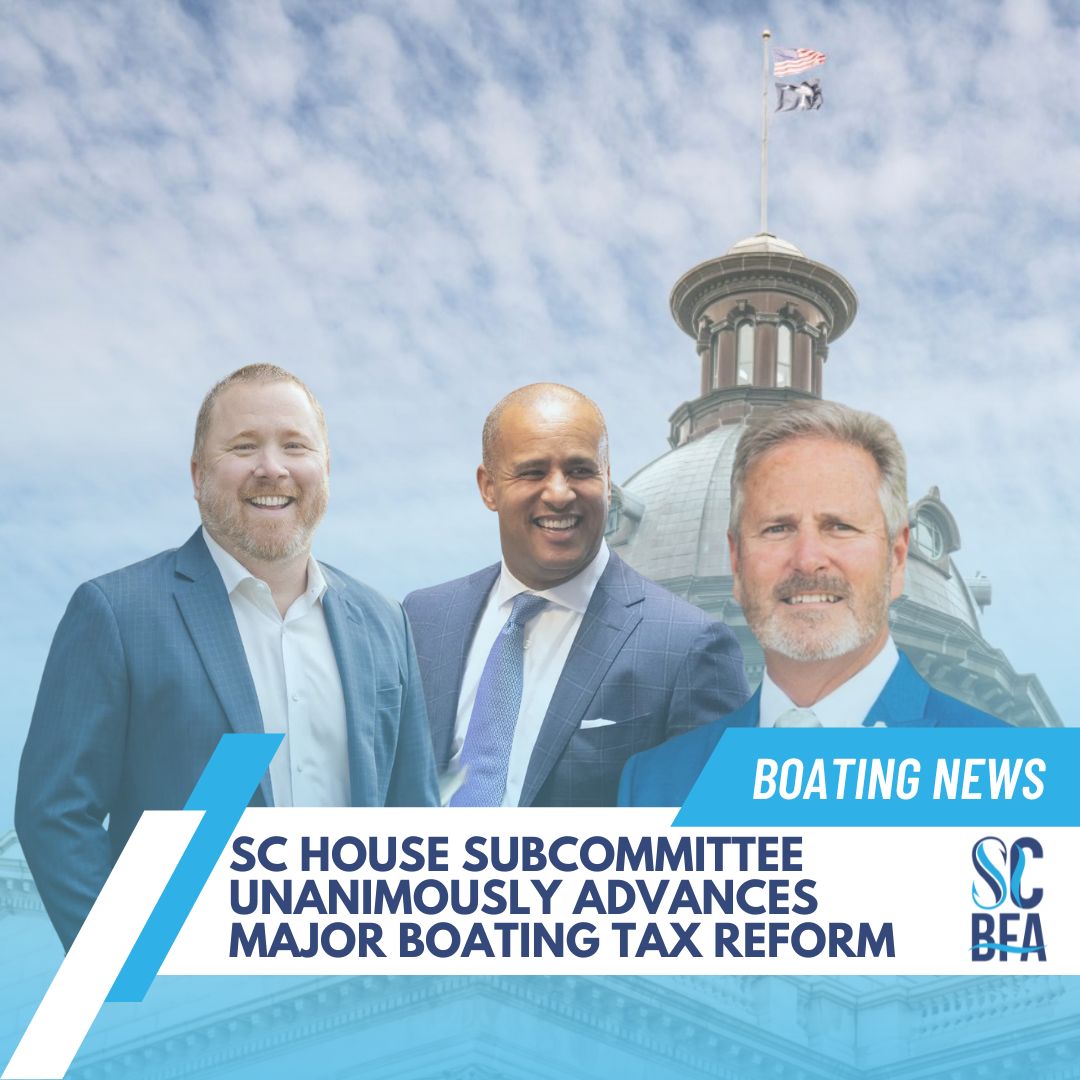
  • SC House Subcommittee Unanimously Advances Major Boating Tax Reform​

    SC House Subcommittee Unanimously Advances Major Boating Tax Reform​

    SC House Subcommittee Unanimously Advances Major Boating Tax Reform

    Governor McMaster Announces His Support for Tax Cuts

    April 23, 2025

    Facebook
    X
    LinkedIn

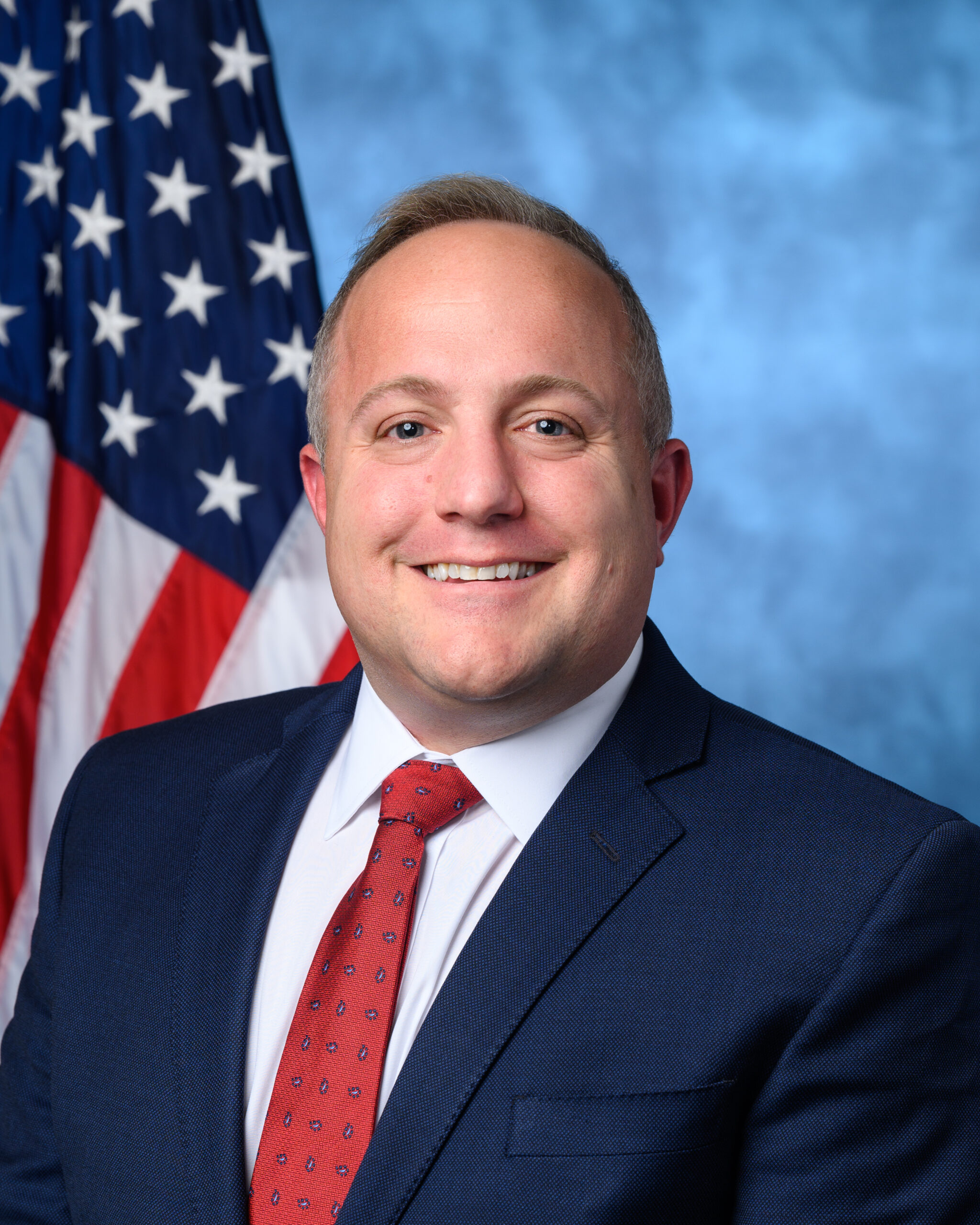
    COLUMBIA, SC  — A major bipartisan push to cut South Carolina’s highest-in-the-nation boat property taxes gained momentum today as the House Ways & Means Property Tax Subcommittee unanimously advanced H.3858 to the full House Ways & Means committee. With over 50 bipartisan sponsors, the bill — led by Rep. Gary Brewer (R–Charleston) — would slash property taxes on boats and motors by 50%, delivering long-overdue relief to hundreds of thousands of middle-class boat owners across the state.

    “This is a tax cut for working South Carolinians,” said Rep. Brewer. “The current system punishes families who want to enjoy our lakes, rivers, and coastlines. H.3858 corrects that injustice by lowering taxes and ending outdated double taxation on boat motors.”

    The effort also received a powerful endorsement from Governor Henry McMaster, who took to X and Facebook Tuesday night to express support: “S.C. boat owners pay the highest property taxes in America. We have a chance to change that. I support cutting boat and motor property taxes so working families can keep enjoying our state’s beautiful waters.”

    South Carolina currently imposes the highest boat property taxes in the United Statesup to 3 to 7 times higher than neighboring states like Georgia and North Carolina. For the same boat on the same lake, Palmetto State families can pay up to $2,800 annually, while a North Carolina neighbor pays less than $400 in some counties.

    House Minority Leader Todd Rutherford (D–Richland), a vocal proponent of the bill, added:

    “This bill is about fairness and freedom. Boating should be about family time, not financial penalties. For too long, the middle class has carried the burden while high-end boats just get registered out of state. That ends now.”

    SCBFA dealer surveys show over 78% of boats over $120,000 are registered outside of South Carolina, largely due to the state’s 10.5% property tax rate on watercraft.

    The result? Smaller boat owners — bass boats, pontoons, and jon boats — are left to foot the bill.

    “It’s embarrassing that South Carolina boaters pay the highest property taxes in the country — over three times more than folks in North Carolina and Georgia,” said Rep. Phillip Lowe (R-Florence). “The high tax is a barrier to the average person. I urge every South Carolinian to contact their legislators and encourage them to lower boat taxes.”

    Beyond the 50% tax reduction, H.3858 also eliminates the outdated requirement to title outboard motors, a practice only six states still enforce. This reform streamlines ownership and cuts red tape for boat buyers and sellers.

    “This is not a cut for yacht owners or big boat owners — because they just don’t keep [their boats] here,” testified Gettys Brannon, President & CEO of the South Carolina Boating & Fishing Alliance. “We’re being penny wise and dollar foolish on this. We are here for the taxpayer, not for government — and to say loud and clear that boat owners and fishermen in South Carolina deserve better.”

    The bill passed with support from subcommittee members Rep. Neal Collins (R–Pickens), Rep. Dennis Moss (R–Cherokee), Rep. Lee Hewitt (R–Georgetown), and Rep. Bill Clyburn (D–Aiken).

    H.3858 now heads to the full Ways & Means Committee for consideration.

    Lower taxes. More access. More money back in your pocket.

    To learn more about H. 3858 or to contact your legislators to express your support for this critical bill, visit the South Carolina Statehouse legislator search tool:

    Find Your Legislators

    Bill Sponsors Include:

    Brewer, Pedalino, Lowe, Mitchell, M.M. Smith, B.J. Cox, Chapman, Davis, Sessions, Erickson, Guffey, B.L. Cox, Hewitt, Teeple, Hartnett, Pope, Rutherford, Brittain, Wooten, Guest, Hager, J.L. Johnson, B. Newton, Bailey, Bustos, Gagnon, Gilliam, Herbkersman, Holman, Jordan, Lawson, Martin, Murphy, Robbins, Ballentine, T. Moore, Montgomery, Sanders, Atkinson, Ligon, Gibson, J. Moore, Caskey, Moss, Huff, Beach, Terribile, Kilmartin, Hardee, Taylor, and Yow.

    Protecting and Expanding Boating and Fishing in South Carolina

    ©2021 South Carolina Boating and Fishing Alliance. All Rights Reserved.

  • Bill to Slash Boat Property Taxes Introduced in S.C. Senate​

    Bill to Slash Boat Property Taxes Introduced in S.C. Senate

    February 7, 2025

    Facebook
    X
    LinkedIn

    COLUMBIA, SC  — South Carolina boat owners who pay some of the highest boat property taxes in the nation could soon see relief. This week, State senators led by Senator Stephen Goldfinch (R-Georgetown) introduced S. 317 in the South Carolina Senate. The bill, which is similar to H. 3858 introduced in the House last week with 40 bipartisan sponsors, will provide a 50% tax cut on watercraft in the state. The bill will have its first committee hearing on Tuesday, Feb. 11, at 2 p.m. at the Gressette Building Room 308 on the Statehouse grounds (1101 Pendleton St., Columbia, SC 29201).

    All boaters and anglers are encouraged to attend.

    “South Carolina is a top destination for boating and fishing, and S. 317 ensures we remain competitive by cutting the tax burden on taxpaying boat owners by 50%. This legislation keeps more boats and jobs right here in our state,” said Sen. Goldfinch. “By aligning our tax structure with neighboring states, we’re supporting our marine businesses, strengthening our economy, and making boat ownership more accessible for South Carolinians. I look forward to working with my colleagues to get this bill across the finish line.”

    S.317 and H. 3858 represent a bipartisan effort to make South Carolina a more affordable and attractive destination for boaters. SCBFA urges swift passage of this important legislation.

    “When we make it more affordable to own and register boats in South Carolina, we’re opening the door for more boaters to call our state home,” said South Carolina Boating & Fishing Alliance President & CEO Gettys Brannon. “This isn’t just good for the taxpaying citizens of South Carolina — it’s good for our marine industry, creating jobs and boosting local businesses that serve boaters and anglers.”

    317 is currently sponsored by Sens. Goldfinch, Fernandez, Stubbs, Cash, Grooms, Gambrell, Davis, Leber, and Johnson.

    The Senate Finance Property Tax Subcommittee will be Sens. Verdin, Gambrell, Martin, Williams, Allen, and Hembree.

    To learn more about S. 317 and H. 3858 or to contact your legislators to express your support for these critical bills, visit the South Carolina Statehouse legislator search tool:
    Find Your Legislators

    Protecting and Expanding Boating and Fishing in South Carolina

    ©2021 South Carolina Boating and Fishing Alliance. All Rights Reserved.
  • Bipartisan Legislation in S.C. House Would Slash Property Taxes on Boats and Simplify Boat Regulations

    Bipartisan Legislation in S.C. House Would Slash Property Taxes on Boats and Simplify Boat Regulations

    January 30, 2025

    Facebook
    X
    LinkedIn

    COLUMBIA, SC — More than 30 members of the South Carolina House of Representatives, led by Representative Gary Brewer (R-Dorchester), have introduced bipartisan legislation to significantly lower costs for boat owners and modernize state regulations.

    H. 3858, which was filed Thursday in the South Carolina House of Representatives, proposes a 50% reduction in property taxes on boats, positioning South Carolina as a more affordable destination for boat ownership. It also seeks to eliminate the outdated requirement for outboard engine titles, a move that aligns the state with 44 others and simplifies the ownership process.

    “For too long, high property taxes and burdensome titling requirements have discouraged South Carolinians from enjoying the open water,” said bill sponsor Rep. Gary Brewer. “This bill ensures that boaters and anglers can afford the boats and equipment made in our state that they need to make the most of our beautiful waterways.”

    Key Benefits of the Legislation: Current property taxes on boats are a staggering 10.5%, making South Carolina one of the most expensive states for boat ownership.

    ·       Cuts Property Taxes by 50%: Relieves financial strain on boat owners, encouraging more boat registrations in South Carolina.

    ·       Addresses Tax Disparities: Tackles South Carolina’s status as having one of the highest property taxes on boats in the nation, reducing the trend of owners registering boats in other states with cheaper taxes.

    ·       Eliminates Instances of Double Taxation: Reduces confusion and errors, ensuring a smoother taxation process.

    ·       Streamlines Boat Buying: Simplifies the ownership process by eliminating outboard engine titles, decreasing paperwork for consumers and state agencies.

    ·       Reduces Workload for Agencies: Eases administrative burdens for the South Carolina Department of Natural Resources (SCDNR) and county auditors.

    “South Carolina’s boating and fishing industries are integral to our way of life and our economy,” said Gettys Brannon, President & CEO of the South Carolina Boating & Fishing Alliance. “This legislation represents a giant leap forward in making boat ownership more affordable while reducing unnecessary bureaucracy. We thank the bipartisan coalition of lawmakers for championing this cause.”

    South Carolina’s $6.5 billion boating and fishing industry has long been hindered by high taxes and cumbersome regulations, leading many boat owners to register their vessels in other states or avoid ownership altogether. By addressing these issues, the legislation is poised to:

    ·       Increase boat registrations in-state, businesses and conservation programs

    ·       Align South Carolina’s practices with national standards, making the state more competitive.

    ·       Enhance clarity for consumers by eliminating confusion surrounding outboard engine model years and titling.

    “South Carolina is pricing itself out of boat ownership. Citizens buy their boats here and register them elsewhere,” said co-sponsor and House Minority Leader Representative Todd Rutherford. “This bill will open the door for more boaters to call our state home and create a ripple effect that benefits not just individuals, but our entire boating and fishing economy and small businesses across the state.”

    H.3858 is currently sponsored by Reps. Brewer, Pedalino, Lowe, Mitchell, M.M. Smith, B.J. Cox, Chapman, Davis, Caskey, Sessions, Erickson, Guffey, B.L. Cox, Hewitt, Teeple, Hartnett, Pope, Rutherford, Brittain, Wooten, Guest, Hager, J.L. Johnson, B. Newton, Bailey, Bustos, Gagnon, Gilliam, Herbkersman, Holman, Jordan, Lawson, Martin, Murphy, and Robbins.

    The SCBFA urges boaters, anglers, and marine industry stakeholders to join in advocating for this transformative legislation.

    Protecting and Expanding Boating and Fishing in South Carolina

    ©2021 South Carolina Boating and Fishing Alliance. All Rights Reserved.